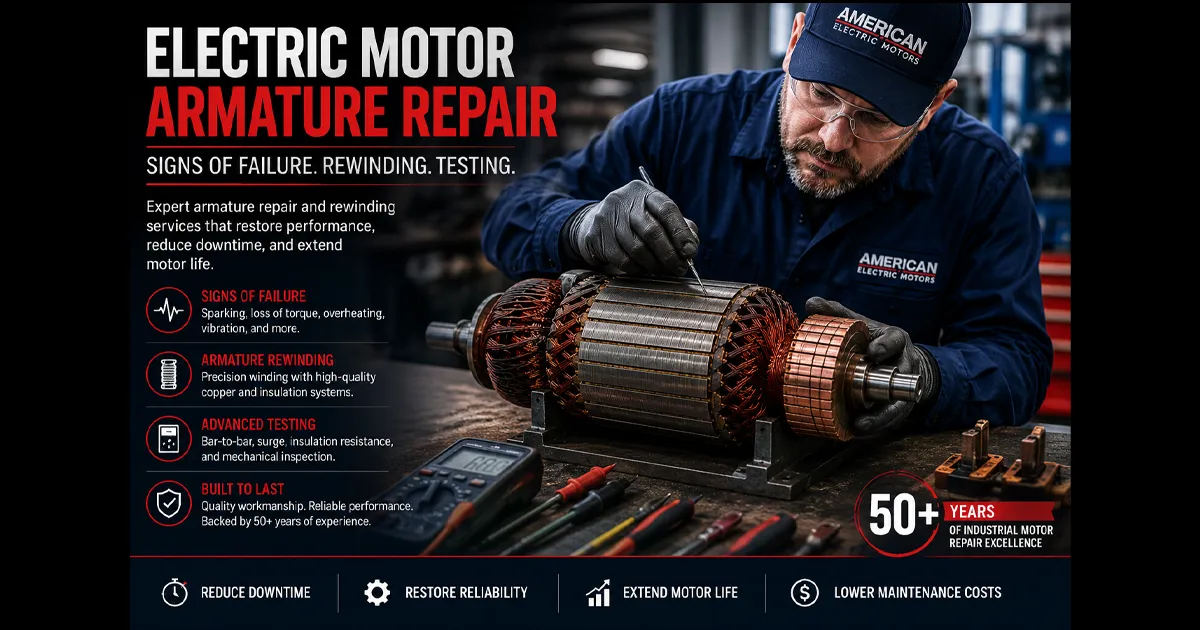
Electric motor armature repair is critical when a motor begins losing torque, sparking, overheating, or failing under load. The armature is one of the most important rotating components in many electric motors, especially DC motors and certain specialized industrial motors. When it fails, the motor may stop producing reliable mechanical power.
American Electric Motors provides expert electric motor repair, armature repair, rewinding, diagnostics, and custom rebuild services. With more than 50 years of experience, we help industrial customers restore motor performance, reduce downtime, and extend equipment life.
What Is an Electric Motor Armature?
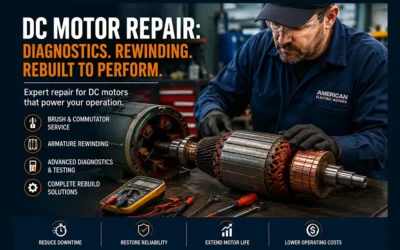
An electric motor armature is the component that carries current and helps produce torque. In many DC motors, the armature works with the commutator, brushes, and field system to convert electrical energy into mechanical rotation. In demanding applications such as overhead cranes, pumps, production equipment, conveyors, and machine tools, the armature must remain electrically sound and mechanically balanced.
For a deeper overview, see American Electric Motors’ article on electric motor armature repairs and rewinding tips.
Why Electric Motor Armature Repair Is Important
A damaged armature can cause more than poor motor performance. It can damage brushes, commutators, bearings, drives, and connected equipment. Delaying electric motor armature repair may turn a repairable motor into a full replacement.
Armature repair helps:
- Restore torque
- Reduce sparking
- Lower operating temperature
- Improve reliability
- Protect related motor components
- Reduce downtime
- Extend motor life
Signs of Armature Failure
Armature problems often produce clear warning signs.
Excessive Sparking
Some brush activity is normal in brushed DC motors, but heavy sparking, arcing, or visible flashing around the commutator can indicate armature winding problems, poor brush contact, contamination, or commutator damage.
Burning Smell
A burnt odor may indicate insulation failure, overheating, or winding damage. If the motor smells hot or electrical, shut it down safely and schedule inspection.
Loss of Torque
A failing armature may struggle to start, stall under load, or fail to deliver expected torque. This is especially serious in cranes, hoists, conveyors, and production equipment.
Overheating
Heat is one of the most common causes and symptoms of electrical motor failure. Armature overheating can come from overload, poor ventilation, voltage problems, winding faults, or mechanical friction.
Vibration or Noise
Armature imbalance, bearing problems, shaft issues, or commutator defects can cause vibration. Left unchecked, vibration can accelerate damage across the motor.
Low Insulation Resistance
Insulation testing can reveal moisture, contamination, or breakdown before total failure. The Megger Guide to Insulation Testing explains the role of insulation resistance testing in electrical maintenance.
Common Causes of Armature Damage
Electric motor armature repair may be needed because of:
- Heat exposure
- Moisture or chemical contamination
- Carbon dust buildup
- Worn brushes
- Damaged commutator
- Overload conditions
- Voltage imbalance
- Bearing failure
- Poor alignment
- Age-related insulation breakdown
- Improper previous repair
Because the armature operates under electrical, thermal, and mechanical stress, a complete inspection is necessary before repair begins.
How Armature Testing Works
A professional electric motor armature repair process begins with testing and documentation.
Visual Inspection
Technicians inspect the armature, commutator, shaft, winding condition, signs of overheating, contamination, and mechanical damage.
Bar-to-Bar Testing
Bar-to-bar testing helps identify inconsistencies between commutator segments and armature windings.
Surge Testing
Surge comparison testing can detect turn-to-turn insulation weaknesses that may not appear during a simple resistance test.
Insulation Resistance Testing
Insulation resistance testing checks whether the winding insulation is protecting the motor properly.
Mechanical Checks
The shaft, bearing journals, commutator roundness, and balance condition are evaluated. A good electrical repair will not last if the armature has unresolved mechanical defects.
EASA’s repair and rewinding resources emphasize the importance of repair practices that preserve motor efficiency, reliability, and quality.
Electric Motor Armature Repair Options
The right repair depends on the condition of the armature.
Cleaning and Reconditioning
If the armature is dirty or contaminated but not electrically failed, cleaning, baking, varnish treatment, and testing may restore reliability.
Commutator Repair
The commutator may need turning, undercutting, polishing, or replacement. Proper commutator condition is essential for brush contact and smooth current transfer.
Armature Rewinding
If windings are shorted, grounded, burned, or deteriorated, armature rewinding may be required. This involves removing old windings and installing new windings to meet the motor’s electrical specifications.
Shaft or Bearing Journal Repair
If the armature has shaft wear or bearing fit problems, machining or repair may be needed before reassembly.
Dynamic Balancing
After repair, the rotating assembly may require balancing to reduce vibration and protect bearings and connected equipment.
Armature Rewinding vs. Replacement
Armature rewinding is often a strong option when the motor is valuable, custom, obsolete, or difficult to replace. It is also useful when a production line, crane, or process system cannot wait for a long replacement lead time.
Replacement may be considered if the armature is severely damaged, the core is compromised, or a new motor is readily available at a better lifecycle cost. American Electric Motors can help determine whether repair, rewind, rebuild, or replacement is the better choice.
For high-power applications, see our article on the benefits of rewound armatures.
Armature Repair for Overhead Crane Motors
Overhead crane motors place heavy demands on armatures because they often operate under high torque, frequent starts, reversing, braking, and load changes. A weak armature in a crane motor can create both downtime and safety concerns.
OSHA’s overhead and gantry crane standard outlines inspection requirements for cranes in regular service. While this standard is not a repair manual, it reinforces the importance of maintaining equipment used in overhead lifting.
American Electric Motors has extensive experience with crane motor and Demag-related motor service. Learn more about our Demag crane motor capabilities.
Why Choose American Electric Motors?
American Electric Motors provides electric motor armature repair with accurate diagnostics, advanced engineering, custom winding options, and quality parts. Our repair process is built around restoring performance while helping customers lower maintenance costs and reduce downtime.
We support:
- DC motor armature repair
- Armature rewinding
- Commutator repair
- Industrial motor diagnostics
- Crane motor repair
- Custom winding
- Rebuilt and replacement motor options
Request Electric Motor Armature Repair
If your motor is sparking, overheating, vibrating, or losing torque, the armature may need inspection. Contact American Electric Motors through the Sales and Service Request page for electric motor armature repair, rewinding, and testing.