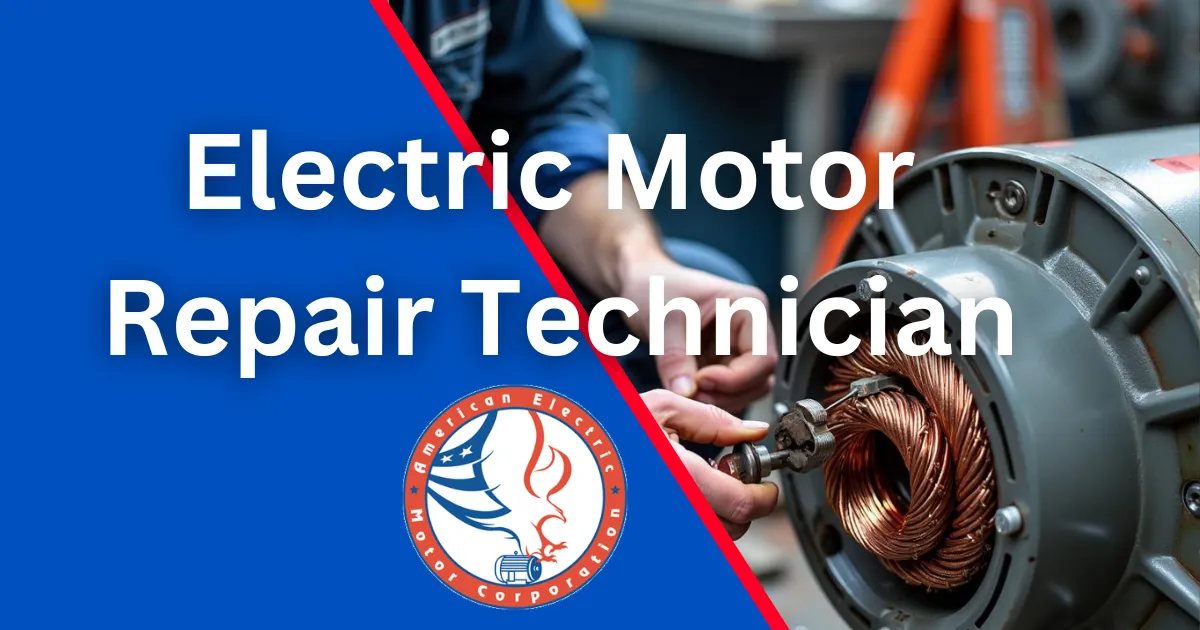
Why the World Needs More Electric Motor Repair Technicians
Every factory floor, every overhead crane, every conveyor belt, and every industrial pump depends on one thing: electric motors. When those motors fail, production stops — and the cost of unplanned downtime can reach thousands of dollars per hour.
Yet there’s a growing problem. The global electric motor repair service market is projected to grow from $9.44 billion in 2025 to $13.64 billion by 2032, and there simply aren’t enough skilled technicians to meet the demand. The skilled trades gap is widening, experienced technicians are retiring, and industries from manufacturing to electric vehicles are scrambling to find qualified hands.
If you’re looking for a career that’s recession-resistant, well-paying, and genuinely essential, learning the trade of electric motor repair might be the smartest move you can make.
At American Electric Motors, we’ve been repairing, rebuilding, and rewinding industrial electric motors for over 50 years. We’ve seen firsthand how this trade transforms lives — and how desperately the industry needs the next generation of skilled technicians. This guide will walk you through everything you need to know about entering this rewarding field.
What Does an Electric Motor Repair Technician Do?
An electric motor repair technician — sometimes called an electric motor mechanic, motor winder, or electromechanical repair technician — is a skilled tradesperson who diagnoses, repairs, rebuilds, and maintains electric motors, generators, and related rotating electrical equipment.
Day-to-Day Responsibilities Include:
- Inspecting and testing motors using multimeters, megohmmeters, oscilloscopes, and vibration analyzers
- Disassembling motors to inspect bearings, shafts, rotors, stators, and windings
- Diagnosing electrical and mechanical faults — from insulation breakdown to bearing failure
- Rewinding stators, armatures, and coils with precision copper wire
- Machining and balancing rotating components to OEM specifications
- Reassembling and testing repaired motors under load conditions
- Performing preventive maintenance to extend motor lifespan
- Reading blueprints, schematics, and work orders to plan repair strategies
- Documenting repair procedures and maintaining inventory records
This isn’t just “fixing things.” It’s a blend of electrical engineering, precision machining, diagnostic problem-solving, and hands-on craftsmanship that requires both brains and skill.
Related: Learn more about the full scope of electric motor repair services offered by American Electric Motors.
The Growing Demand: Why This Trade Is More Relevant Than Ever
A Market That’s Booming
The numbers tell a compelling story. The global motor repair and maintenance market is expected to reach $36.6 billion by 2033, driven by:
- Industrial expansion across manufacturing, mining, oil & gas, and water treatment
- The electric vehicle revolution creating massive demand for motor-skilled technicians
- Energy efficiency mandates pushing companies to repair and optimize existing motors rather than replace them
- Aging infrastructure requiring more frequent maintenance and overhaul
A Workforce That’s Shrinking
Meanwhile, the workforce is thinning. Experienced motor repair technicians are retiring faster than new ones are entering the trade. The Bureau of Labor Statistics projects about 22,300 job openings annually for electric motor, power tool, and related repairers, many of which come from the need to replace workers who retire or transfer to other occupations.
In the EV sector alone, a shortfall of up to 35,700 technicians is predicted by 2030 if retraining isn’t addressed urgently. This skills gap means job security and bargaining power for those who enter the trade now.
How to Become an Electric Motor Repair Technician: 4 Proven Pathways
There’s no single path into this trade — and that’s one of its strengths. Whether you prefer hands-on learning, structured education, or a combination of both, there’s a route that fits.
- Apprenticeship Programs (The Gold Standard)
Apprenticeships are widely considered the best way to learn electric motor repair because they combine paid on-the-job training with classroom instruction.
What to expect:
- Duration: Typically 4 years (approximately 8,000 hours total)
- Structure: ~7,520 hours of on-the-job training + ~480 hours of in-class technical training
- Pay: Apprentices typically start at $20–$25/hour and earn more as they advance
- Outcome: Journeyperson designation and, in some regions, a Certificate of Qualification
Curriculum typically covers:
- Workplace safety and lockout/tagout procedures
- Electrical and electronic fundamentals
- Motor and control systems repair
- AC/DC motor theory and rewinding techniques
- Automation and automated controls
- Blueprint reading and technical troubleshooting
- Related welding and machining
Where to find apprenticeships:
- Apprenticeship.gov — The U.S. Department of Labor’s official apprenticeship finder
- American Institute for Innovative Apprenticeship — Offers Electric Motor Repairer apprenticeship programs
- Local IBEW (International Brotherhood of Electrical Workers) chapters
- State apprenticeship agencies (e.g., Oregon Bureau of Labor and Industries)
Pro Tip: Companies like American Electric Motors value apprenticeship-trained technicians because they arrive with both theoretical knowledge and real-world shop experience.
- Vocational and Technical School Programs
Community colleges and trade schools offer certificate and associate degree programs in Electrical Technology, Electromechanical Technology, or Industrial Maintenance that provide an excellent foundation.
Programs typically include:
- Fundamentals of electricity and electronics
- Motor disassembly, inspection, repair, and reassembly
- Electromechanical system design and maintenance
- Industrial controls and PLCs
- Hands-on lab work with real motors and diagnostic equipment
Notable programs:
- Northeast Community College — Electromechanical Apprenticeship program
- WyoTech — Hands-on technical training programs
- Local community colleges with Industrial Maintenance or Electrical Technology programs
A two-year associate degree combined with hands-on experience can fast-track your career and open doors to higher-paying positions.
- Online Training and Continuing Education
Online courses are an excellent way to build foundational knowledge or upskill if you’re already working in a related field.
Top online resources:
- Elevify — Free Electric Motor Repair Training Course covering diagnostics, safety protocols, repair techniques, and preventive maintenance
- Alison — Free course on Maintenance & Control of Electric Motors for technicians and engineers
- ABB Training — Certified training courses on motor maintenance, diagnosis, and condition monitoring
- ElectroMentors — Specialized courses in medium and high-voltage motor rewinding
- EASA Learning Center — Industry-specific training for electromechanical repair technicians
Online training works best as a supplement to hands-on experience — not a replacement. The real learning happens when you’re elbow-deep in copper windings with a megohmmeter in your hand.
- On-the-Job Training
Many electric motor repair shops hire entry-level workers with a high school diploma and basic mechanical aptitude, then train them on the job. This path typically involves:
- 1–2 years of working alongside experienced technicians
- Gradual progression from simple tasks (cleaning, disassembly) to complex repairs (rewinding, diagnostics)
- Informal mentorship and skill development
This is how many of the best technicians in the industry got their start — including several members of the team at American Electric Motors.
Essential Skills Every Electric Motor Repair Technician Needs
Technical Skills
Skill
| Skill | Why It Matters |
| Electrical Theory | Understanding voltage, current, resistance, and magnetic fields is the foundation of motor repair |
| Motor Diagnostics | Using megohmmeters, multimeters, and vibration analyzers to pinpoint faults |
| Rewinding | Precisely winding copper coils to restore or improve motor performance |
| Machining | Turning shafts, boring housings, and balancing rotors to OEM tolerances |
| Blueprint Reading | Interpreting schematics, winding diagrams, and technical drawings |
| Welding | Repairing motor frames, brackets, and structural components |
| Preventative Maintenance | Implementing maintenance schedules that prevent catastrophic failures |
Soft Skills That Set You Apart
- Problem-solving ability — Every motor failure is a puzzle to solve
- Attention to detail — A single misconnected lead can destroy a motor
- Physical stamina — Motors can weigh hundreds or thousands of pounds
- Communication — Explaining technical issues to non-technical clients
- Time management — Industrial clients need motors back fast
Related: See how American Electric Motors applies these skills in our armature repair and rewinding services.
Industry Certifications That Boost Your Career
Certifications validate your skills, increase your earning potential, and make you more attractive to employers. Here are the most valuable ones:
EASA Accreditation and Training
The Electrical Apparatus Service Association (EASA) is the gold standard for the motor repair industry.
Key offerings include:
- ANSI/EASA AR100 — The American National Standard for recommended practices in rotating electrical equipment repair. First approved in 1998 and regularly updated (latest: AR100-2025), this standard covers everything from initial assessment to final testing.
- Electromechanical Repair Technician (ERT) Certificate — A structured learning path providing tangible proof of a technician’s mechanical repair foundation
- EASA Accredited Repair Program — Service centers that pass independent third-party audits earn the right to display the “EASA Accredited” designation.
Additional Certifications
- Certified Electric Motor Technician (CEMTE)
- ASE (National Institute for Automotive Service Excellence) certifications — Particularly valuable for EV motor work
- NFPA 70E Electrical Safety certification
- Vibration Analysis certifications (Category I–IV) through the Vibration Institute
Related: American Electric Motors maintains the highest repair standards. Learn about our DEMAG-certified motor repair capabilities.
Salary and Compensation: What Can You Earn?
The financial rewards of this trade are solid — and they grow significantly with experience and specialization.
Electric Motor Repair Technician Salary Breakdown
| Experience Level | Hourly Rates | Annual Salary |
| Entry-Level / Apprentice | $18–$25/hr | $37,000–$52,000 |
| Mid-Career | $25–$30/hr | $52,000–$62,000 |
| Experienced / Specialized | $30–$35+/hr | $62,000–$67,500+ |
Factors that increase your earning potential:
- Specialization in high-voltage motors, overhead crane motors, or explosion-proof (Ex) motors
- EASA certifications and continuing education
- Geographic location — Industrial hubs and metropolitan areas typically pay more
- Overtime — Emergency motor repairs often command premium rates
- Advancement to shop supervisor, service manager, or business owner
Many experienced technicians at established shops like American Electric Motors earn at the higher end of these ranges, especially those with specialized skills in crane motor repair or large electric motor repair.
What a Career Path Looks Like
Here’s a realistic timeline for building a successful career in electric motor repair:
Years 1–2: Foundation Building
- Enter through an apprenticeship, trade school, or entry-level shop position
- Learn basic disassembly, cleaning, inspection, and reassembly
- Study electrical theory and motor fundamentals
- Develop safety habits and shop procedures
Years 3–5: Skill Development
- Progress to independent diagnostics and repair work
- Learn rewinding techniques for AC and DC motors
- Begin specializing (e.g., overhead crane motors, high-voltage motors, or pump motors)
- Earn your first industry certifications
Years 5–10: Mastery and Specialization
- Handle complex repairs: large motors (100+ HP), custom windings, precision balancing
- Mentor junior technicians
- Pursue advanced certifications (vibration analysis, thermography)
- Potential to move into supervisory or management roles
Years 10+: Leadership and Legacy
- Senior technician, shop foreman, or service manager
- Consulting on major industrial motor projects
- Potential to start your own motor repair business
- Training the next generation of technicians
The Tools of the Trade
Every electric motor repair technician needs to be proficient with a range of specialized tools and equipment:
Diagnostic Tools
- Megohmmeter (Megger) — Tests insulation resistance
- Digital multimeter — Measures voltage, current, and resistance
- Surge tester — Detects turn-to-turn shorts in windings
- Vibration analyzer — Identifies mechanical imbalances and bearing issues
- Thermal imaging camera — Detects hot spots indicating electrical problems
- Motor circuit analyzer — Comprehensive motor health assessment
Repair Equipment
- Winding machines — For precision coil winding
- Burnout ovens — Safely remove old windings from stator cores
- VPI (Vacuum Pressure Impregnation) systems — Seal and protect new windings
- Dynamic balancing machines — Balance rotors to minimize vibration
- Lathes and boring mills — Machine shafts and housings
- Hydraulic presses — Remove and install bearings and couplings
Related: See these tools in action in our electric motor rebuilding process.
Why Learn This Trade at (or With) an Established Shop?
There’s a reason the best motor repair technicians often learned their craft at established, full-service repair shops rather than solely in classrooms. Here’s what a shop like American Electric Motors offers that a textbook can’t:
Real-World Diversity of Work
In a single week, you might work on a 1/4 HP fractional motor from a conveyor system and a 2,000 HP motor from a steel mill. That range of experience is invaluable and something no training program can fully replicate.
Mentorship From Decades of Experience
Our technicians have 50+ years of combined expertise in diagnosing and repairing every type of industrial motor imaginable. Learning alongside seasoned professionals accelerates your development exponentially.
Exposure to Specialized Equipment
From custom motor rewinding to Demag crane motor repair, established shops invest in specialized equipment and maintain manufacturer certifications that give technicians access to the highest level of the trade.
Understanding the Business Side
Working in a professional shop teaches you how to communicate with clients, manage repair timelines, source parts, and deliver results — skills that are essential whether you want to advance in your career or eventually run your own operation.
How to Get Started Today: Your Action Plan
Ready to take the first step? Here’s your roadmap:
Step 1: Assess Your Starting Point
- Do you have a high school diploma or GED? ✅
- Do you have basic mechanical aptitude and an interest in how things work? ✅
- Are you comfortable with physical work? ✅
If you checked all three, you’re ready.
Step 2: Choose Your Path
- Fastest entry: Apply for entry-level positions at local motor repair shops
- Most structured: Enroll in an apprenticeship through Apprenticeship.gov
- Most flexible: Start with online courses from Elevify or EASA while working
- Most comprehensive: Enroll in a vocational/technical school program
Step 3: Build Your Foundation
- Study electrical theory fundamentals
- Learn to use basic diagnostic tools (multimeter, megohmmeter)
- Practice mechanical skills (disassembly, bearing replacement, basic machining)
Step 4: Pursue Certifications
- Start with the EASA Electromechanical Repair Technician (ERT) Certificate
- Work toward ANSI/EASA AR100 compliance knowledge
- Add specialized certifications as you advance
Step 5: Never Stop Learning
- Attend EASA conventions and seminars
- Stay current with evolving motor technologies (VFDs, IE4/IE5 efficiency motors, EV motors)
- Read industry publications like Reliable Plant
The Bottom Line: A Trade Worth Learning
The electric motor repair trade offers something increasingly rare in today’s economy: a career that can’t be outsourced, can’t be automated, and will always be in demand. As long as industry runs on electric motors — and it will for the foreseeable future — skilled technicians who can keep those motors running will be essential.
With a projected market growth to $13.64 billion by 2032, strong salaries, clear advancement paths, and the deep satisfaction of mastering a skilled craft, there has never been a better time to enter this field.
Whether you’re a young person exploring career options, a mid-career professional looking for a change, or a military veteran with mechanical experience seeking a civilian career — the electric motor repair trade is waiting for you.
Ready to see what world-class electric motor repair looks like? Contact American Electric Motors to learn about our services or explore career opportunities with a team that’s been setting the standard for over 50 years.