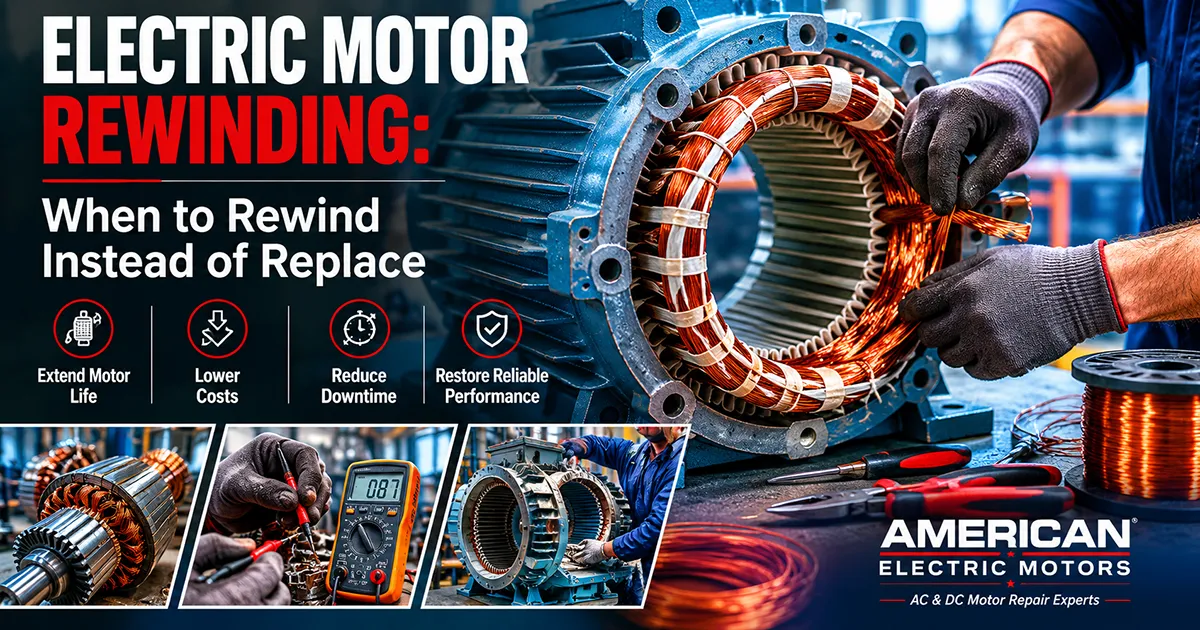
Electric motor rewinding is one of the most practical ways to restore a failed or underperforming industrial motor without immediately replacing the entire unit. For factories, machine shops, crane operations, pump systems, and production lines, the right rewind can extend motor life, reduce downtime, and help preserve the equipment your operation already depends on.
At American Electric Motors, we provide expert electric motor repair, diagnostics, rewinding, and rebuild services for AC and DC motors from sub-fractional horsepower to large industrial motors. When a motor has winding damage, insulation failure, overheating, or shorted coils, electric motor rewinding may be the most cost-effective path back to reliable performance.
What Is Electric Motor Rewinding?
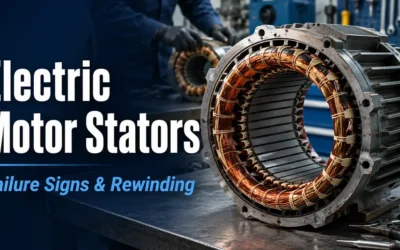
Electric motor rewinding is the process of removing damaged or deteriorated windings and replacing them with new copper windings that match the motor’s electrical and mechanical requirements. The process may involve disassembly, inspection, old winding removal, core cleaning, coil fabrication, insulation replacement, varnish or impregnation, reassembly, and testing.
The goal is not simply to “make the motor run again.” A professional rewind should restore dependable operation, protect the insulation system, and support the motor’s original performance requirements. The Electrical Apparatus Service Association offers a Good Practice Guide to Maintain Motor Efficiency for service centers and motor winders that emphasizes the importance of quality repair and rewind practices.
When Electric Motor Rewinding Makes Sense
Electric motor rewinding is often the right choice when the motor has good mechanical value but damaged windings. This is especially true for custom, obsolete, hard-to-source, large, or mission-critical motors.
Common reasons to consider electric motor rewinding include:
- Burned, shorted, or grounded windings
- Insulation breakdown from heat, moisture, contamination, or age
- Repeated overload or voltage imbalance
- Motor failure in a production-critical application
- Long lead times for a new replacement motor
- A custom shaft, mount, frame, voltage, or winding specification
- A high-value motor where replacement is significantly more expensive
If the frame, shaft, bearings, rotor, stator core, and housing are still repairable, electric motor rewinding can restore the motor while avoiding the time and cost of sourcing a new unit.
Rewind vs. Replace: How to Decide
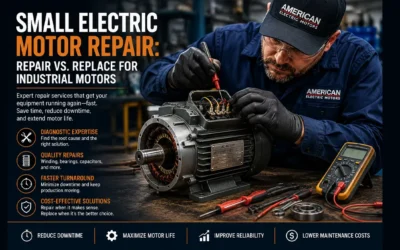
The decision to rewind or replace should start with a proper diagnosis. The U.S. Department of Energy’s Improving Motor and Drive System Performance sourcebook emphasizes that motor-driven systems should be evaluated as part of a larger reliability and efficiency strategy, not just as isolated components.
A repair shop should evaluate:
Motor Size and Replacement Cost
Small, standard, off-the-shelf motors may be easier to replace. Larger industrial motors, specialty motors, and motors with custom winding requirements are often stronger rewind candidates.
Lead Time
If a new motor takes weeks or months to source, electric motor rewinding can reduce downtime and get production moving faster.
Application Criticality
A conveyor, crane, pump, blower, or production motor may be too important to wait on replacement. In these cases, a rewind can be part of a fast repair strategy.
Core and Mechanical Condition
A motor with severe core damage, broken laminations, cracked housings, or major shaft damage may require a deeper rebuild or replacement. A motor with winding failure but solid mechanical condition is often a good rewind candidate.
The Electric Motor Rewinding Process
A high-quality rewind follows a controlled process.
1. Inspection and Testing
Before rewinding, technicians inspect the motor and perform diagnostic testing. This may include insulation resistance testing, winding resistance testing, surge testing, visual inspection, bearing inspection, and mechanical checks. The Megger Guide to Insulation Testing explains how insulation resistance testing helps evaluate insulation condition.
2. Disassembly and Documentation
The motor is carefully disassembled. Nameplate data, lead connections, winding details, coil dimensions, slot configuration, and mechanical conditions are documented before old windings are removed.
3. Winding Removal and Core Cleaning
Old windings are removed while protecting the stator or armature core. Improper burnout or rough handling can damage the core and reduce future performance.
4. New Coil and Insulation Installation
New coils are fabricated or installed to match the required specifications. The insulation system is selected based on voltage, temperature, duty cycle, and operating environment.
5. Varnish, Curing, and Reassembly
The rewound motor is treated with insulating varnish or impregnation, cured, reassembled, and prepared for final testing.
6. Final Testing
Final testing confirms that the motor is ready to return to service. This may include insulation resistance, surge comparison, winding resistance, vibration checks, and no-load operation.
Why Custom Winding Matters
Not every electric motor rewinding job is the same. Motors used in overhead cranes, pumps, conveyors, machine tools, compressors, and specialty equipment may need winding adjustments to match real operating conditions.
Custom winding can help address:
- High starting torque requirements
- Heat-sensitive environments
- Frequent starts and stops
- Voltage or speed changes
- Hard-to-replace OEM configurations
- Heavy industrial duty cycles
American Electric Motors provides custom repair and rewinding solutions designed around the motor, the application, and the urgency of the repair.
Warning Signs Your Motor May Need Rewinding
A motor does not always fail instantly. Many winding problems show warning signs first.
Watch for:
- Tripped overloads or breakers
- Burnt odor from the motor
- Hot motor housing
- Reduced torque
- Slow startup
- Unusual humming
- Visible winding discoloration
- Repeated fuse or drive faults
- Low insulation resistance readings
When these symptoms appear, schedule diagnostics before the failure becomes more expensive.
Why Choose American Electric Motors for Electric Motor Rewinding?
American Electric Motors has more than 50 years of experience repairing, rebuilding, and rewinding AC and DC electric motors. Our team supports industrial customers with accurate diagnostics, high-quality parts, advanced engineering, and custom winding options.
We help customers:
- Extend motor lifespan
- Lower maintenance costs
- Restore reliable performance
- Reduce unplanned downtime
- Avoid unnecessary replacement
- Improve long-term equipment reliability
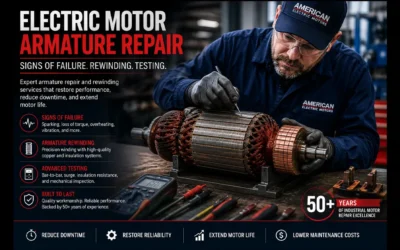
For related reading, see our guide on rewound armatures for high-power motors and our full electric motor repair services.
Get Help With Electric Motor Rewinding
If your motor is overheating, shorting, losing torque, or showing insulation failure, do not assume replacement is the only option. A professional inspection can determine whether electric motor rewinding, rebuilding, or replacement is the right move.
Contact American Electric Motors through our Sales and Service Request page to get expert help with electric motor rewinding and repair.